Captioner – Image Captioning for AI Training
Type: Software Status: MVP Tech Stack: Python, FastAPI, Uvicorn, Pydantic, Pillow, React 18, Vite, Tailwind CSS, HuggingFace Transformers, PyTorch, Florence-2, JoyCaption, Docker, CUDA Problem Statement Training AI image models, for example LoRA or diffusion fine-tuning, requires image datasets in which every image has a matching text description stored next to it as a .txt file

THE IDEA
Captioner – Image Captioning for AI Training
Type: Software Status: MVP Tech Stack: Python, FastAPI, Uvicorn, Pydantic, Pillow, React 18, Vite, Tailwind CSS, HuggingFace Transformers, PyTorch, Florence-2, JoyCaption, Docker, CUDA Problem Statement Training AI image models, for example LoRA or diffusion fine-tuning, requires image datasets in which every image has a matching text description stored next to it as a .txt file of the same name. Maintaining these descriptions by hand in a text editor is tedious and error-prone. Individuals and small teams need a convenient interface that shows image and description side by side and lets a local vision model pre-fill empty captions, without the training images ever leaving their own machine. Description Captioner is a lean, locally run web application (React SPA + FastAPI backend) that reads an image folder recursively and provides an editable caption field for every image. The descriptions are saved as .txt sidecar files of the same name next to the images — the format that common LoRA and diffusion training setups expect. Empty captions can be filled automatically, either by local vision models (Microsoft Florence-2, JoyCaption via HuggingFace) or by a filename fallback, encapsulated in a provider registry with a runtime availability check. Output is produced as free text or as a normalised, comma-separated tag list. The tool runs in three Docker Compose variants (UI only, CPU vision, GPU vision with CUDA), so training images never leave your own machine; there is no database, the file system is the storage. The core workflow is complete; automated tests, an upload UI and batch control are still missing. Use Case A simple tool for conveniently captioning lots of images and having a local AI pre-fill the text, so they can be turned into training data for your own image AI models. Link: https://github.com/rawk7000/captioner (private repo)
KEEP EXPLORING
More discoveries
Three more pieces from the archive.
 PROJEKTE
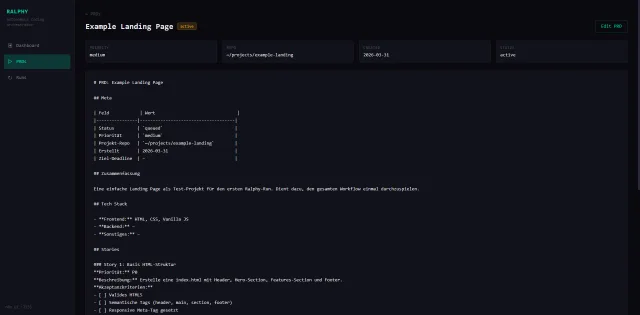
Ralphy – Autonomous AI Coding Loop
Type: Software Status: In Development Tech Stack: Bash, Claude Code (CLI), Obsidian (Markdown/REST API), n8n (Docker mit PostgreSQL/Redis), Telegram Bot, Git Problem Stat...
↗ PROJEKTE
kAI zero – Virtual Artist
Type: Art Project Status: V.1.0 Tech Stack: Suno, Unreal Engine, Motion Capturing Problem Statement The music industry faces the question of how AI-generated music can be...
↗ PROJEKTE
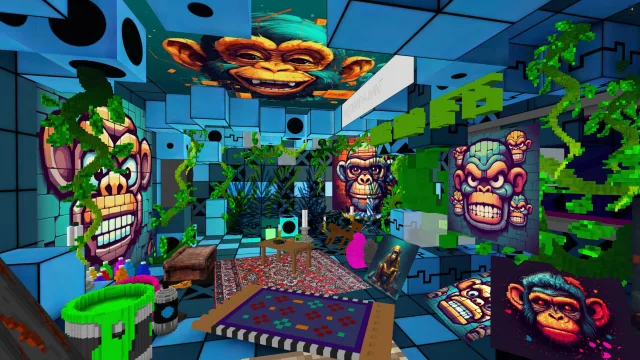
Landesgalerie.com
Landesgalerie.eth is an innovative virtual art gallery in the Cryptovoxels Metaverse and soon in Otherside, dedicated to promoting digital art, integrating traditional ar...
↗SEND A SIGNAL
LET’S MAKE
SOMETHING
monstrous.
An idea beyond safe waters?
For extraordinary collaborations, consulting and workshops: send a signal.